I Propose New Terms for the USA-China Rivalry: The Silk Curtain and the Silk War
A side hobby of mine is studying geopolitics and military history. I’ve been methodically reading through Churchill’s books on WWII (more on that in a moment) and closely studying that global conflict and the years surrounding it before and after. I’ve been using an app I helped create (that’s not available publicly) that has allowed me to relive WWII on a day-to-day basis in the same way citizens in the 1940s USA would have experienced it. My app is calibrated to make 1939 equivalent to 2023. Since September 2023, I’ve been experiencing the events of WWII on a day-to-day newsreel basis. My app has newspaper headlines and data points that track events during WWII as they were reported in the news and heard by civilians and it presents the day’s news events in a daily calendar setting. So each day I open my app and see what the latest news is with the Second World War as if it’s happening in real time. 2026 is equivalent to 1942. (The winter and spring of 1942 were very rough months for Britain, by the way, wow.). I’ve also been reading Churchill’s WWII books in chronological order and not advancing any further in his books than where my app is in the day-to-day WWII real-time calendar.
While doing this, I’ve greatly appreciated Churchill’s ability to create or popularize effective language — short phrases, single words, even — that have concrete immediacy. His coined terms — and the ones he popularized — could convey the vast intricacies of a world situation instantly into the minds of both scholarly and non-scholarly readers and listeners. For example, Churchill popularized the term Iron Curtain.
Against this backdrop of studying WWII and the years surrounding it (including some Cold War items), I’ve been following the current 2020s USA-China relationship closely. I’ve been dissatisfied with the current language available to capture this very strange relationship. For example, the term Cold War 2.0 has been used. The history and failure of this term provides some irony: in truth, "Cold War 2.0" was coined for the wrong rivalry (West-Russia), applied loosely to the right rivalry (US-China), and still failed to fit either one well. It's a term that managed to be inadequate twice. (See my source list for more information on that irony.) Other similar terms — "Second Cold War," "Cold War II," and "New Cold War" fall into the same problems. The analytical imagination seems to be stuck.
This sparked a thought experiment: what would Churchill call the relationship? He wouldn’t have called it a Second Iron Curtain when describing China’s growing global influence. He wouldn’t have called it a Second Cold War when describing US-China tensions. The US-Sino relationship in 2026 bears striking similarities to the first Cold War in some ways, yes, but it is fundamentally different. He would have noted that immediately. He would’ve reached for something concrete that captured the striking fundamental paradox that makes this situation unique in history: China and the USA are simultaneously each other's largest trading partners and each other's primary strategic threat.
In that same spirit — and as a humble nod to Churchill’s gift and eye for powerful language — I propose the following terms: the Silk Curtain and the Silk War.
These terms work from top to bottom in ways that would have attracted Churchill’s mind, I suspect.
There is immediate historical resonance. We all know the Iron Curtain. This Silk variation functions as both a tribute and a correction. It says, “this is like that, but different on a fundamental level.” No other explanation needed.
Then there’s the Silk Road reference. This immediately conveys the weight of ancient China-West trade routes, economic interdependency, and cultural transmission.
There’s a nice material contrast. Iron is cold and stiff, designed to pull apart and be impassable. Silk is malleable, beautiful, and connective, but it can be very strong in ways that surprise. Silk was used as armor historically. It captures the visceral tension between softness and strength, between near-war conflict and interdependent connection. It captures the strange paradoxical space that China and the US inhabit together.
And the companion phrase “Silk War” captures something not found in a Cold War or a Cold War 2.0 label. Why? Because commerce is the battlefield, not just a background, and this creates paradoxes. The term “silk” helps to capture these paradoxes. The many volleys on that battleground — tariffs, rare earth embargoes, semiconductor controls, TikTok bans, Huawei restrictions — are all acts of war accomplished via trade. Yet despite all the harsh, war-like rhetoric sometimes exchanged between the two superpowers, the two nations are deeply entangled and interdependent on one another economically. In the 20th-century Cold War, the Soviet Union and the U.S. could afford to let the other collapse. In the Silk War of the 21st Century, China and the U.S. almost certainly cannot, at least not without apocalyptic, catastrophic self-damage.
The silk itself is the weapon, but it’s also the smooth, soft material that ties the two together.
Going forward in future writings here (or elsewhere), I’ll stop referring to the US-China tensions as another Cold War or Cold War 2.0. Those terms just don’t fit. While reading Churchill’s books, I could easily imagine his impatience and discontent with the recycling of these old terms, even though he helped popularize or coin them. He would’ve demanded much better terms.
I’ll now be calling it the Silk War and referring to the dividing barrier of China's growing global influence and rivalry as the Silk Curtain.
I think Churchill would have appreciated the simplicity and depth of these new terms.
———-
*I researched terms in geopolitical works that try to describe the USA-China relationship and I did not encounter anyone using the terms Silk War or Silk Curtain, which is why I’m venturing to call them “new” — as foolhardy as that might be. They are, at the very least, new to me, and I’m satisfied with them as replacements for any previous terms. The terms I found during the research process are listed below. These articles provide a brief history of USA-China terminology by geopolitical experts.
Note: Research assistance and source-finding provided by Claude AI (Anthropic).
Previously Used Terms for the China-USA Relationship and Their Sources
The best source that discusses the whole landscape of inadequate terminology is this Brookings piece on "hardening competition and deep interdependence":
"Chimerica" — coined by Niall Ferguson and Moritz Schularick in their 2007 paper "Chimerica and the Global Asset Market Boom":
Wikipedia overview: https://en.wikipedia.org/wiki/Chimerica
Ferguson's own summary at the Belfer Center (Harvard): https://www.belfercenter.org/publication/what-chimerica-hath-wrought
"Thucydides Trap" — Graham Allison, The Atlantic, September 24, 2015:
Harvard Kennedy School listing: https://www.hks.harvard.edu/publications/thucydides-trap-are-us-and-china-headed-war
"Strategic competition" as the bland diplomatic default — this Oxford academic article is excellent for showing this term’s evolution and limitations as a label:
"Frenemies," "cooperative competition," and "competitive interdependence" — these are more diffuse, general terms that never had a single definitive coinage the way Chimerica did. This source provides a great survey of them:
And this PMC article titled "It's not a cold war: competition and cooperation in US-China relations" directly argues the inadequacy of existing frames:
The term "Cold War 2.0" appears in the scholarly record alongside "Second Cold War," "Cold War II," and "New Cold War" as various labels for post-Cold War era tensions between the United States and China or Russia.
None of these four variants has a clear single originator.
The earliest substantial use of Cold War 2.0 found during my research process was applied primarily to the West-Russia relationship after the annexation of Crimea in 2014, not to US-China tensions. A 2017 Observer Research Foundation analysis explicitly titled "Cold War 2.0" examined whether the West-Russia confrontation over Ukraine qualified for the label — and concluded that it largely did not, given that the modern world's interdependence limits action-taking in ways that fundamentally distinguish it from the original Cold War.
In addition to the sources above, the articles below have been helpful. They provide a crisp snapshot of China’s expanding global influence in the mid-2020s:
RAND on China's moon mission: https://www.rand.org/pubs/commentary/2025/11/china-is-going-to-the-moon-by-2030-heres-whats-known.html
Georgetown on the Iran war and China: https://gjia.georgetown.edu/conflict-security/the-war-against-iran-and-global-risks-tell-me-how-this-ends/
Carnegie Endowment counterpoint: https://carnegieendowment.org/russia-eurasia/politika/2026/03/china-russia-rescue-iran
Hudson Institute on Iran as Chinese architecture: https://www.hudson.org/national-security-defense/iran-strike-all-about-china-zineb-riboua
Variety on Ne Zha 2: https://variety.com/2025/film/global/china-animation-box-office-ne-zha-1236337439/
The Diplomat on China-Iran partnership limits: https://thediplomat.com/2026/03/the-china-iran-partnership-and-the-limits-of-beijings-non-interference-alliance-model/
Foreign Policy on China's absence in Middle East: https://foreignpolicy.com/2026/04/06/iran-war-china-geopolitics-trump-superpower-rivalry-strategy-united-states/
Asia Times on China using Iran as proxy AI lab: https://asiatimes.com/2026/04/china-using-iran-as-proxy-lab-for-future-ai-warfare-with-us/

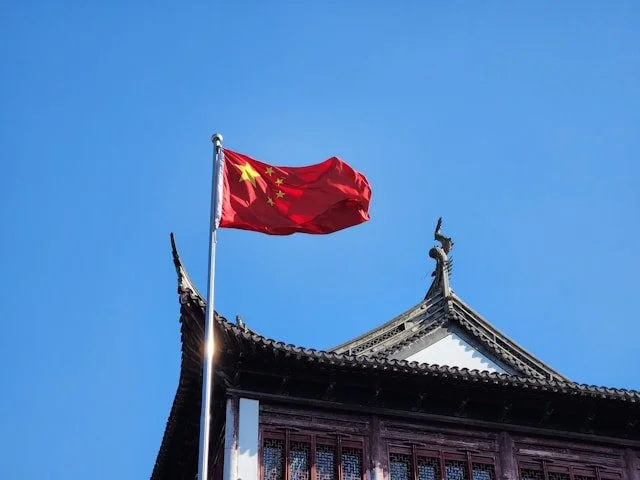
Photo by Dominic Kurniawan Suryaputra on Unsplash — photo taken in Shanghai, China published with Unsplash in 2024
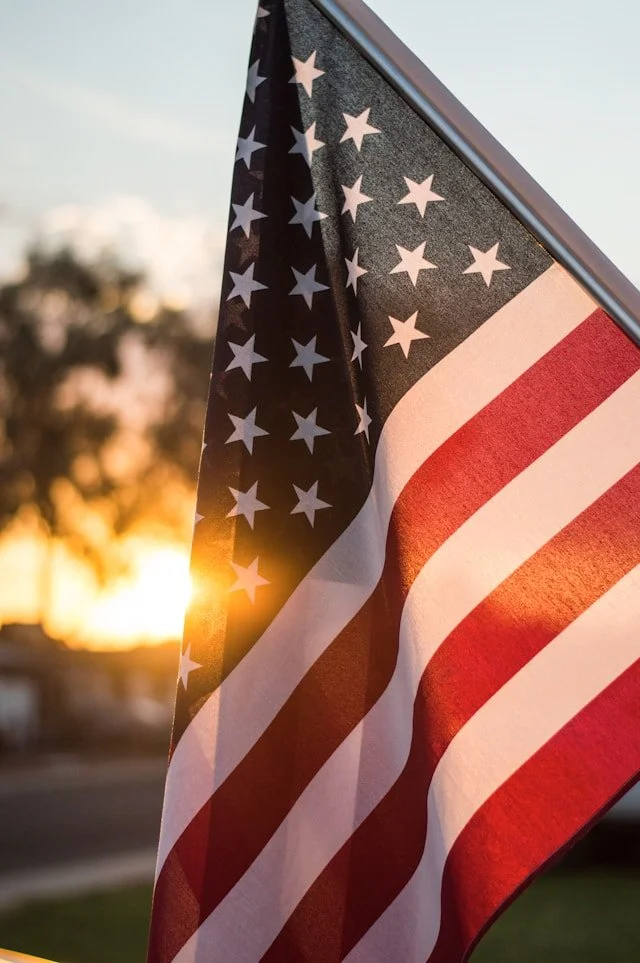
Photo by Andrew Ruiz on Unsplash — photo published with Unsplash on July 10, 2017